
The Prince Group of Events
The Prince Group of Events
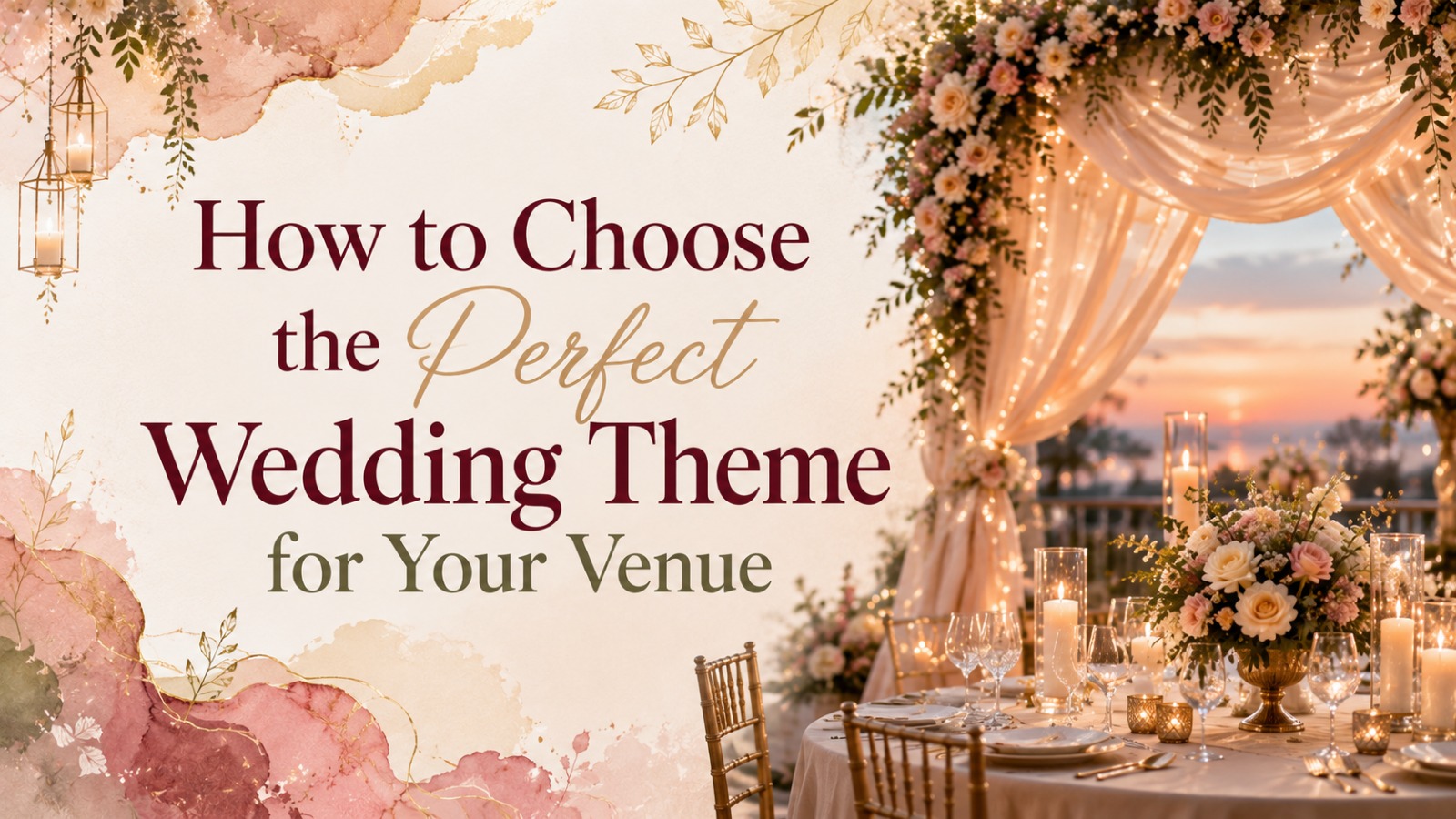
How to Choose Perfect Wedding Theme for Your Venue
Here's something that happens more often than couples expect. Someone falls completely in love with a theme, pastel and dreamy, let's say, after seeing it at a friend's wedding or on some Instagram reel, and then decor setup day arrives and the venue's dark wood interiors and heavy carved pillars just fight the whole look at every turn. The theme itself wasn't the problem. It simply wasn't right for that particular room.
Most articles on how to choose a wedding theme jump straight into mood boards and color palettes without dealing with the one thing that actually matters most, the physical space you're decorating. This one starts there instead, and it goes into something almost nobody covers properly, how to pick a theme that holds together across a full Indian wedding with multiple functions, not just a single ceremony on one afternoon.
Look at the venue before you look at anything else
Every couple walks in with some rough vision already forming in their head, and that's completely normal. But once a venue is booked, that venue becomes the biggest constraint on what a wedding theme for venue decisions can realistically look like. A theme isn't picked in isolation, it gets picked in relation to the architecture, the lighting, the layout of one specific space, and ignoring that usually means you're paying good money to fight the room instead of working with it.
Walk through the venue in person if you possibly can, or watch a thorough video walkthrough if you genuinely can't. Notice the existing color palette already sitting there, walls, flooring, any fixed architectural features you can't change. Notice what the natural light actually does, and whether that shifts a lot between a daytime function and an evening one. Notice the general personality of the space too, ornate and heritage feeling, sleek and modern, open and leaning outdoorsy. Answering these narrows your realistic wedding theme ideas fast, before you've spent a single afternoon scrolling inspiration boards.
Which wedding venue Theme Ideas actually fit which venue
Certain venue types just naturally suit certain themes better than others, and pushing against that mismatch is where a lot of the decor budget quietly disappears.
|
Venue Type |
Themes That Work Naturally |
Themes to Approach Carefully |
|
Heritage haveli or palace |
Royal and regal, traditional Rajasthani, vintage |
Minimal and modern, since ornate architecture competes with clean lines |
|
Modern banquet hall |
Contemporary, fusion, bold and bright |
Rustic or boho, since these need natural texture the space doesn't have |
|
Outdoor lawn or garden |
Boho garden, pastel and dreamy, floral heavy |
Heavy palace style drapery, which can feel out of place outdoors |
|
Beach or lakeside resort |
Nautical, tropical, relaxed destination themes |
Royal or heavily traditional, which usually needs an indoor, formal setting |
|
Rooftop or terrace venue |
Minimal and elegant, string light and fairy light heavy |
Elaborate stage builds, since structural weight and space are often limited |
None of this is a hard rule, honestly. A genuinely skilled decorator can push against a mismatch and still pull it off. But overriding a venue's natural character costs more than leaning into it, and for most budgets, working with the space instead of against it just gets you a better result for less money.
Explore More: Best Wedding Venues in India for NRI Couples
Picking your theme once the venue's locked in
Once the venue's confirmed, here's a sequence that actually gets you somewhere, rather than endlessly comparing inspiration photos that all start to blur together after a while.
Look at the venue's dominant material and color first, stone, wood, marble, whatever's defining the space visually, and decide whether your palette should complement it or intentionally push against it. A haveli with warm sandstone tones pairs beautifully with jewel tones and gold accents. A clean, white modern venue can take almost any bold color you throw at it, since it's essentially a blank canvas to begin with.
From there, think about season and time of day for each individual function, since Indian weddings often run daytime and evening events back to back, and lighting changes what any theme actually looks like quite dramatically between a noon haldi and a night sangeet.
Then settle on two or three defining colors, and genuinely stop there. A theme trying to juggle five colors across five different functions tends to end up looking scattered instead of cohesive, whereas a tighter two or three color palette, adjusted slightly in intensity per function, reads as intentional and pulled together across photos.
Last step, decide how much the theme should shift between functions versus staying the same throughout. This is the part most wedding guides never really get into, mostly because they're built around planning one single event, not five back to back ones.
Making one theme work across every function
This is genuinely the hardest part of the whole process, and it deserves its own section because getting it wrong is such a common trap.
A theme doesn't need to look identical at haldi and at the reception. Honestly, it shouldn't. What it needs is one consistent thread running through every function so the whole wedding feels like a single cohesive event rather than five separate parties that just happen to share a couple. The simplest way to pull this off is picking a base palette, then letting each function carry its own accent within it. Marigold and yellow tones for haldi, the same base gold and cream carried through but styled more elaborately for the actual ceremony, and a bolder, more festive version of that same color family for sangeet or the reception.
|
Function |
How the Core Theme Typically Adapts |
|
Haldi |
Brighter, more casual version of the palette, marigold accents common |
|
Mehndi |
Similar to haldi but a bit more decorated, greens and florals often added |
|
Sangeet |
Bolder, more festive, lighting heavy version of the same base palette |
|
Wedding ceremony |
The most elevated, formal expression of the theme |
|
Reception |
Usually the most polished version, sometimes with metallics or deeper tones |
Decorators who regularly work across multiple functions at one wedding already know how to build this kind of progression. Worth asking directly how they plan to carry your theme through, instead of assuming each function gets treated as its own separate project.
Read More: How to Choose the Right Wedding Decorator in Jaipur
What's actually popular right now, and where it fits
A handful of themes keep coming up in real 2026 bookings, and each one pairs naturally with a certain kind of venue.
Royal and regal leans into deep reds, gold, maroon, heavier drapery, and it genuinely works best at palace or haveli venues where the architecture's already doing half the work for you. Pastel and dreamy uses blush, lilac, champagne tones with soft lighting, and suits outdoor or naturally lit venues particularly well. Boho garden goes heavy on greenery and organic texture, and it needs an actual outdoor or garden element in the venue itself to feel authentic instead of forced. Classic white and gold is close to universal at this point, it photographs cleanly and works at nearly any venue, which is a big part of why it hasn't gone out of style. Fusion themes blend traditional elements with modern touches, LED lighting next to a dhol entry, say, and these suit modern venues that can support both aesthetics without clashing.
Decor choices that do more than they look like they should
A few decisions consistently pull more visual weight than people expect, regardless of which overall theme you land on.
Lighting changes more than any other single choice you'll make. Warm, layered lighting, fairy lights mixed with lanterns or uplighting, makes even a fairly simple setup feel thought through, while flat, harsh lighting can undercut an otherwise expensive job.
Height variation in florals and decor adds depth that a flat, single level setup just doesn't have. Mixing tall installations with lower table level arrangements gives a space real dimension in photos.
Textiles matter more at some venues than others. A heritage venue with a lot of existing architecture often needs less added decor and more thoughtfully placed textiles, drapes, cushions, runners, to soften and complement what's already there instead of trying to cover it up entirely.
Budget-friendly decoration ideas that still feel intentional
Not every wedding needs elaborate installations to look considered. A tighter budget put toward a few well executed pieces, a striking entrance, a cohesive stage backdrop, consistent lighting throughout, generally photographs better than a bigger budget spread too thin across every corner of a venue. If you have to choose where the money goes, put it toward the stage or mandap and the entrance first, since those get the most photo attention and set the tone for everything that follows.
Frequently Asked Questions
Should I choose my venue or my wedding theme first?
Choose the venue first. Most experienced planners push for this specifically because a venue's architecture, lighting, and overall character narrow down which themes will actually work and which ones will require expensive overriding of the space you've already booked.
Can the same wedding theme work across haldi, mehndi, sangeet, and the reception?
Yes, and it generally should, though the theme should flex a bit rather than staying completely identical across every single function. A consistent base palette with each function getting its own accent or intensity reads as cohesive without ever feeling repetitive.
What's the most budget friendly way to make a wedding theme feel cohesive?
Put your spend toward lighting and two or three consistent colors carried through every function, rather than spreading a limited budget thin across a dozen different decor elements. A tight, well executed palette photographs better than a broader one applied inconsistently.

Recent Posts
One Hotel vs Multiple Hotels for a Jaipur Destination Wedding
Wed Oct 07 2026
Wedding Decoration Cost in Jaipur: Stage, Mandap and Floral Pricing
Mon Oct 05 2026
Destination Wedding in Jaipur for 200 Guests: Complete Cost Breakdown
Fri Oct 02 2026
Jaipur Marriott Hotel Wedding Cost: Venue, Food and Accommodation
Wed Sep 30 2026
Share this post
Get In Touch
Company
- About Us
- Album
- Wedding Services
- Real Wedding
Favourite Planner
- Wedding Decorators in Jaipur
- Wedding Venues In Jaipur
Other Links
- Privacy Policy
- Terms & Conditions
- Blog
Contact Us
Plot no. 77, Dhaka Nagar, Maa Anjani Nagar, Jaipur, Rajasthan 302012
Copyright © 2026 All Rights Reserved