
The Prince Group of Events
The Prince Group of Events
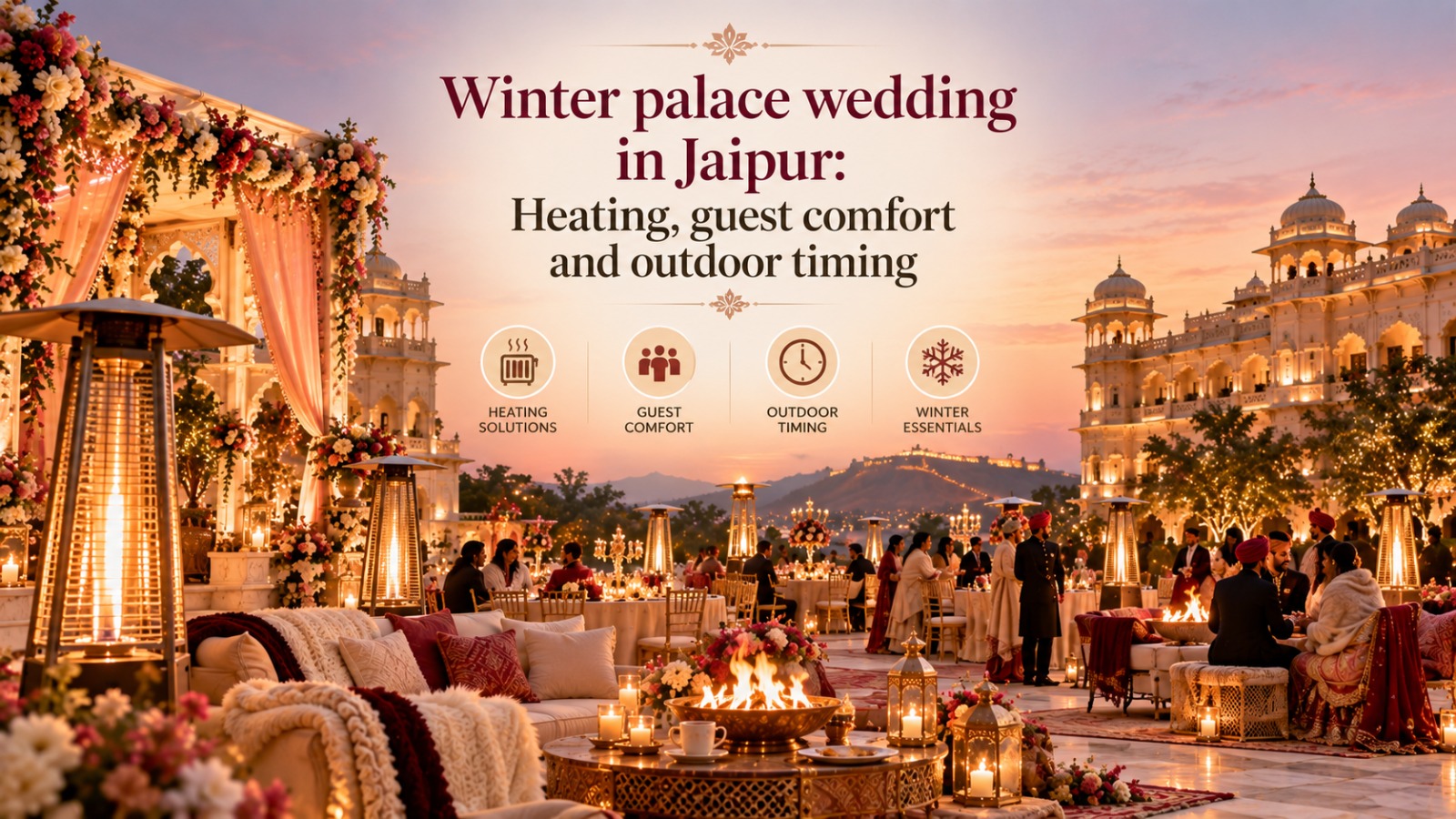
Winter palace wedding in Jaipur: Heating, guest comfort and outdoor timing
A winter palace wedding in Jaipur works best when daytime functions use the warmer afternoon hours and evening events have a proper heating plan. December and January can bring a sharp difference between pleasant daytime weather and cold nights. Guests may feel comfortable during a sunny mehndi, then struggle on the same lawn after sunset.
Heating should be planned alongside lighting, sound and catering. It should not be added a few days before the wedding. The venue may restrict gas heaters, fire pits and open flames, particularly in courtyards or near heritage structures.
According to Rajasthan Tourism, winter generally begins in October, and December and January can bring a considerable difference between daytime and nighttime temperatures. Couples should check the latest forecast through the IMD Meteorological Centre Jaipur before confirming the final function timings.
Is winter a good time for a palace wedding in Jaipur?
Winter is one of the most suitable periods for an outdoor palace wedding in Jaipur. Courtyards, terraces and gardens can be used without the intense heat experienced during much of the year.
The season also suits:
- Outdoor mehndi and haldi functions
- Afternoon wedding ceremonies
- Palace lawn receptions
- Courtyard dinners
- Sundowner events
- Outdoor photography
- Traditional baraat processions
The trade-off is that December and January evenings can feel genuinely cold, especially at properties outside the main city or near the Aravalli hills. Open lawns are usually colder than sheltered courtyards. Wind can make the temperature feel lower than the forecast suggests.
Winter planning should be based on the exact month and function time rather than the broad idea that Jaipur has pleasant weather.
Check Out: Best Season for Palace Weddings in Jaipur
What is Jaipur’s winter weather like?
Jaipur’s daytime winter weather is often comfortable in direct sunlight. Conditions change quickly after sunset. Cold air settles across open lawns, stone courtyards and terraces, and guests may remain outdoors for several hours.
A practical planning guide is:
|
Wedding period |
Typical planning concern |
|
Late October to November |
Mild afternoons and cooler evenings |
|
December |
Comfortable days with noticeably cold nights |
|
January |
Cold mornings and nights, with possible fog |
|
February |
Pleasant days and generally milder evenings |
These are seasonal patterns, not a forecast for a specific wedding. Temperature, wind and fog can vary from one date to another.
Check the short-range weather forecast during the final week. The production team should be ready to increase heating, add wind protection or move part of the programme indoors.
Which winter months need the most heating?
December and January usually need the strongest heating plan, especially for events continuing after 8:00 PM. An afternoon function may not need heaters at all, while the same lawn can become uncomfortable two hours later.
November and February often need lighter arrangements, but heating should still be available for:
- Late-night pheras
- Open-air dinners
- Windy lawns
- Hill-facing venues
- Elderly guests
- Children
- Guests arriving from warmer regions
- Guests wearing lighter formal clothing
Do not decide the heater requirement from the daytime temperature. Review the expected temperature during the actual function hours.
How should outdoor function timings be planned?
The schedule should use natural daylight and the warmer part of the day wherever possible.
|
Function |
Practical winter timing |
|
Haldi |
10:30 AM to 1:00 PM |
|
Mehndi brunch |
11:00 AM to 3:00 PM |
|
Welcome lunch |
12:30 PM to 3:00 PM |
|
Sundowner |
3:30 PM to 6:30 PM |
|
Daytime wedding |
11:00 AM to 4:00 PM |
|
Baraat |
Late afternoon or early evening |
|
Evening wedding |
Begin before the temperature falls further |
|
Outdoor dinner |
Start service soon after the main ceremony |
|
Late-night pheras |
Use a sheltered or properly heated area |
The exact sunset time changes through the season. Photography, lighting and ceremony plans should be prepared for the wedding date rather than copied from another event.
Is an afternoon palace wedding better in winter?
An afternoon ceremony is often a sensible choice for December or January. Guests can enjoy the palace gardens in daylight, photographs benefit from natural light, and the wedding may finish before the coldest part of the night.
A daytime wedding can follow this schedule:
- 10:30 AM: Guest arrival
- 11:00 AM: Welcome drinks
- 11:30 AM: Baraat
- 1:00 PM: Varmala and wedding ceremony
- 2:00 PM: Lunch
- 4:00 PM: Ceremony completion
- 5:00 PM: Guest return or evening break
This format works particularly well for families with elderly guests and children. It also reduces the amount of heating required.
The limitation is that makeup, dressing and photography must begin early. The couple should check whether the proposed ceremony time fits their religious requirements and selected muhurat.
How should late-night pheras be managed?
Late-night pheras need a separate comfort plan. Guests may have already spent several hours outdoors before the ceremony begins.
Consider:
- A smaller, sheltered mandap area
- Heaters around guest seating
- Shawls or blankets near the entrance
- Hot beverages before the ceremony
- A nearby indoor waiting lounge
- Short walking distance from dinner to the mandap
- Dedicated assistance for elderly guests
Do not place heaters too close to flowers, fabric, wooden structures or electrical cables. The production and fire-safety teams should approve their positions.
If only close family will attend the late-night rituals, move the pheras to a smaller courtyard or semi-covered area. Heating a compact space is easier than trying to warm a large lawn for a reduced guest count.
How many heaters are required?
There is no reliable one-heater-per-guest formula. The requirement depends on:
- Lawn size
- Guest count
- Seating arrangement
- Wind exposure
- Heater type and output
- Distance between dining and stage areas
- Number of active outdoor zones
- Function duration
- Venue restrictions
A wedding with 200 guests may have several separate areas needing warmth:
- Main seating
- Dining tables
- Bar
- Elderly guest lounge
- Mandap
- Hospitality desk
- Artist waiting area
- Entry and valet waiting point
Placing every heater near the stage leaves dining and guest seating cold. Prepare a scaled heating layout just as you would prepare a lighting plan.
The rental company should inspect the venue before quoting. A quotation based only on guest count may not account for wind, pathways and multiple event zones.
Which type of heater is suitable for a palace wedding?
Common options include electric radiant heaters and freestanding outdoor heaters. The property may restrict certain equipment because of fire risk, ventilation or protection of the building.
Electric radiant heaters
These direct heat towards people and objects rather than trying to warm all the surrounding air. They can work in covered or semi-covered spaces where suitable electrical capacity is available.
Check:
- Total electrical load
- Cable routing
- Weather protection
- Generator capacity
- Distance from décor
- Venue approval
Freestanding outdoor heaters
These are commonly used around lounge areas and dining spaces. The safety radius must remain clear, and the base should be stable.
The venue may limit their placement near:
- Heritage walls
- Low ceilings
- Fabric structures
- Dry landscaping
- Wooden flooring
- Guest pathways
Fire pits and angeethis
Open-fire features can look attractive, but they are not suitable for every palace. Smoke, ash, sparks and carbon monoxide present genuine concerns.
Do not add them to the plan without written permission from the venue and fire-safety team. Some properties will allow enclosed decorative units but prohibit open flames.
Ask the palace about heating restrictions
Before paying a heater vendor, ask the venue:
- Are gas heaters allowed?
- Are electric heaters permitted outdoors?
- Can heaters be placed in courtyards?
- Are open-flame units prohibited?
- What electrical load is available?
- Is a separate generator required?
- Which areas cannot contain heating equipment?
- Is firefighting equipment required nearby?
- Who approves the final heater layout?
- When can installation and testing begin?
Verbal approval is not enough for equipment involving heat, fuel or additional electrical load.
Create warm guest zones rather than heating empty space
A palace lawn may cover a large area, but guests usually gather around the stage, bar, food counters and seating.
Bring these elements closer together where the venue layout permits. A compact plan can improve comfort and reduce the number of heaters required.
Useful warm zones include:
- Covered lounge near the stage
- Hot beverage counter
- Sheltered dining section
- Heated mandap seating
- Indoor family lounge
- Warm waiting area near valet pickup
Avoid spreading sofas across the entire lawn for visual balance. Empty distances make the wedding harder to heat and less comfortable to walk through.
Protect guests from wind
Wind often causes more discomfort than the temperature itself. A sheltered courtyard can feel warmer than an exposed lawn on the same evening.
The production team may use approved transparent or decorative barriers around selected areas. These should not block exits, create unstable structures or interfere with service movement.
Natural protection can also come from:
- Palace walls
- Courtyard layouts
- Covered verandas
- Existing hedges
- Tented lounge areas
- Enclosed dining sections
A closed tent requires ventilation and fire-safety review. It should not be treated as a simple décor item.
Provide shawls without making them look like an afterthought
Shawls can be useful, particularly for guests wearing sarees, sleeveless blouses or lighter formal clothes.
They can be arranged:
- Inside welcome hampers
- At the entrance to an evening function
- On selected lounge chairs
- At the hospitality desk
- Near the mandap
- In rooms for elderly guests
Choose neutral or wedding-coordinated colours. Avoid placing every shawl in one basket at the far end of the venue.
If the family plans to give shawls as wedding favours, confirm the quantity, quality and packaging well in advance. A cheaper product that sheds fibres over formal clothing will not be appreciated.
Inform guests about outdoor conditions
Guests can prepare when the invitation or itinerary says that an event is outdoors.
A simple note is enough:
The sangeet and wedding ceremony will take place outdoors. Jaipur evenings can be cold in December, so please carry a warm shawl, jacket or suitable layer.
Mention outdoor conditions to overseas guests and families travelling from warmer cities. Many people pack according to photographs of sunny Jaipur afternoons and do not expect the temperature to fall quickly at night.
The message should be practical, not alarming.
Guest comfort for elderly relatives
Elderly guests need more than one heater near the stage.
Plan for:
- Rooms close to lifts
- Short vehicle-to-venue routes
- Wheelchairs where required
- Reserved seating away from wind
- Padded chairs with back support
- A heated indoor lounge
- Early dinner service
- Easy access to restrooms
Arrange a separate car instead of making elderly relatives wait for the final coach. They should be able to return to their rooms when they are ready.
Planning for children
Children may become uncomfortable before adults notice the cold.
Families with young children may need:
- Warm indoor room near the function
- Early meal
- Blankets
- Extra layers
- Babysitting support
- Early return vehicle
- Rooms close to the event venue
Keep children away from heaters, fuel cylinders, exposed cables and open-fire features.
Warmth begins in the guest rooms
Guest comfort is not limited to the lawn. Confirm room heating and hot-water arrangements with every hotel used for the wedding.
Check:
- Room heating system
- Extra blanket availability
- Hot-water timing
- Early-morning tea
- Bathroom ventilation
- Heating in suites used for makeup
- Warm waiting areas near reception
Heritage hotels may have thick stone walls and high ceilings. These rooms can feel colder than modern hotel rooms even when the temperature outside is the same.
Test the bridal and family suites during the venue visit. Makeup and dressing can take several hours, so these rooms need comfortable heating.
Food planning for a winter wedding
Hot food cools quickly on an open lawn. Plan service around smaller, frequently replenished batches rather than displaying large quantities for long periods.
Useful winter menu choices include:
- Hot soups
- Kebabs served directly from the grill
- Fresh breads
- Warm desserts
- Tea and coffee
- Hot chocolate
- Kahwa
- Warm regional beverages
- Late-night snacks near the pheras
The menu should still include lighter options. Guests may not want every dish to be heavy simply because the weather is cold.
Place food counters near dining areas. Long walks across a lawn allow plates to cool before guests reach their tables.
Hot beverage stations need proper staffing
A hot beverage counter can become crowded after sunset. Assign enough staff and keep options limited enough for quick service.
A practical counter may offer:
- Masala tea
- Coffee
- Green tea or kahwa
- Hot chocolate
- One caffeine-free option
Place a second service point near the mandap if the main counter is far away.
Do not put boiling equipment in narrow guest pathways. The catering team must manage electrical cables, fuel and hot-water containers safely.
Bar planning during cold weather
Winter guests may spend more time near the bar if it is one of the warmer areas. This can create congestion.
Provide:
- Heated or sheltered bar location
- Non-alcoholic warm drinks
- Water service
- Bar snacks
- Adequate standing space
- Safe distance from heaters and electrical equipment
Alcohol does not protect the body from cold. Drinking water and warm non-alcoholic choices should remain easy to access.
Winter décor needs practical material choices
Some materials respond differently to cold, condensation and wind. The decorator should consider:
- Stability of tall floral installations
- Fabric movement in open areas
- Morning dew on seating
- Condensation on flooring
- Wind resistance of signage
- Cold metal furniture
- Candle and flame restrictions
- Electrical protection
Ask the team to wipe outdoor seating before morning functions. Dew can leave cushions, sofas and table linen damp.
Use padded or upholstered seating where possible. Metal chairs may feel cold even when the air temperature is manageable.
Read More: Marwari Wedding Decoration Ideas
Lighting should begin before sunset
Palace properties change quickly as daylight fades. Guests need clear lighting on steps, stone paths and transitions between courtyards.
The lighting plan should include:
- Guest pathways
- Staircases
- Restrooms
- Food service areas
- Parking and valet route
- Heater zones
- Emergency exits
- Mandap access
- Hotel-to-lawn walkway
Decorative lighting should not replace functional illumination. Elderly guests need to see changes in floor level and uneven stone surfaces.
Complete the sound and lighting check before temperatures fall. Technical delays become harder to manage once guests arrive.
Morning fog and guest arrivals
January mornings can sometimes bring fog to North India, affecting road journeys and flights. Do not build the wedding schedule around every guest arriving shortly before the first ceremony.
For guests travelling through Delhi or flying into Jaipur:
- Encourage arrival a day or several hours before the first major function.
- Track flights and road departures.
- Keep the welcome event flexible.
- Arrange food for delayed guests.
- Maintain backup airport and railway vehicles.
The planner should check live travel conditions rather than assume that every flight or road transfer will operate on schedule.
Prepare an indoor backup
A winter wedding still needs an indoor alternative. Cold wind, unexpected rain or dense fog can make an outdoor plan uncomfortable even when the temperature appears acceptable.
The backup space should be:
- Reserved in the contract
- Large enough for the actual guest count
- Included in the production plan
- Measured for the mandap or stage
- Approved for sound and catering
Do not treat the ballroom as a theoretical backup. Decide which décor elements can move indoors and how long the change will take.
Set a deadline for making the final outdoor-or-indoor decision. Waiting until guests arrive leaves too little time for safe relocation.
How much should be budgeted for winter comfort?
Heating costs depend on the equipment, event areas, function duration and venue rules. The winter comfort budget may include:
- Heater rental
- Generator or electrical distribution
- Fuel
- Fire-safety equipment
- Installation staff
- Wind barriers
- Covered lounges
- Shawls
- Additional carpeting
- Extra transport for elderly guests
Request separate line items instead of accepting one combined winter charge. This makes it easier to remove unnecessary equipment without affecting essential safety arrangements.
Test the complete setup before the wedding
The heater test should happen at the same venue and, where possible, near the same time as the planned function.
Check:
- Whether guests can feel the heat from their seats
- Heater noise
- Fuel smell
- Cable placement
- Stability
- Availability of backup units
- Staff responsible for monitoring
A heater that works during a daytime setup may be insufficient after the lawn becomes colder and windier.
Sample winter wedding schedule in Jaipur
Day one
12:00 PM: Guest check-in and lunch
3:00 PM: Outdoor mehndi
5:30 PM: Sunset transition and guest break
7:30 PM: Sangeet in a heated courtyard or ballroom
10:00 PM: Dinner
Day two
10:30 AM: Outdoor haldi
1:00 PM: Lunch
3:30 PM: Couple and family preparation
5:00 PM: Baraat
6:30 PM: Varmala
7:00 PM: Wedding dinner
9:00 PM: Pheras in a heated, sheltered area
Day three
8:30 AM: Indoor or sun-facing breakfast
11:00 AM: Guest departures
Function timings should be adjusted for the wedding muhurat, venue rules and current weather forecast.
How a wedding planner manages winter arrangements
An experience wedding planner coordinates the venue, production company, caterer and hospitality team around the actual weather conditions.
The work may include:
- Reviewing seasonal weather patterns
- Setting practical function timings
- Preparing the heater layout
- Checking venue restrictions
- Planning electrical load
- Creating warm guest zones
- Arranging shawls and hot beverages
- Preparing an indoor backup
- Revising transport schedules
- Monitoring the forecast
- Managing the final outdoor decision
- Supervising equipment during the function
Heating should sit inside the main production plan. It affects the layout, electrical load, fire safety and guest movement.
Frequently asked questions
Is Jaipur too cold for an outdoor wedding in December?
No, but evening functions require planning. Daytime conditions are often comfortable, while temperatures can fall considerably after sunset. Use heaters, sheltered seating and an indoor backup.
Are heaters necessary for a Jaipur palace wedding?
Heaters are usually advisable for outdoor evening events in December and January. The number and type depend on the lawn, wind, guest count and venue restrictions.
What is the best time for an outdoor winter wedding in Jaipur?
Late morning to afternoon is usually the most comfortable period. A sundowner or early evening ceremony can also work when heating begins before guests feel cold.
Can pheras be held outdoors at night?
Yes, provided the mandap and guest seating are sheltered and properly heated. Keep an indoor lounge nearby and arrange early return transport for elderly guests.
Are gas heaters allowed at palace venues?
Policies differ. Some venues restrict gas heaters, open flames and fire pits, particularly near heritage buildings or fabric installations. Obtain written approval before confirming the equipment.

Recent Posts
How to Manage Guests Staying at Multiple Hotels During a Jaipur Wedding
Wed Sep 23 2026

Destination wedding in Jaipur for 100 guests: Venue, rooms and cost planning
Mon Sep 21 2026

How to Plan ₹1 Crore Destination Wedding in Jaipur
Fri Sep 18 2026
Palace Wedding Permissions in Jaipur: Music, fireworks, drones and heritage rules
Wed Sep 16 2026
Share this post
Get In Touch
Company
- About Us
- Album
- Wedding Services
- Real Wedding
Favourite Planner
- Wedding Decorators in Jaipur
- Wedding Venues In Jaipur
Other Links
- Privacy Policy
- Terms & Conditions
- Blog
Contact Us
Plot no. 77, Dhaka Nagar, Maa Anjani Nagar, Jaipur, Rajasthan 302012
Copyright © 2026 All Rights Reserved